For the past several decades, the primary function of artificial intelligence systems in the corporate and scientific worlds has been overwhelmingly analytical, focusing on tasks such as classifying images, predicting financial outcomes, recognizing speech patterns, and efficiently sorting through massive datasets to identify known patterns, all of which represent critical, but fundamentally reactive and interpretive, computational processes that rely entirely on the pre-existence of input data.
While these systems, often powered by deep learning neural networks, have successfully optimized virtually every aspect of operational efficiency and complex problem-solving, they lacked the crucial ability to invent, compose, or produce novel content—to step beyond mere interpretation and enter the domain of true creation, a capacity long considered the exclusive and sacrosanct hallmark of human intellect and artistry.
The emergence of Generative AI, a revolutionary class of models trained to learn the underlying distributions and structures of data and then autonomously produce entirely new, realistic, and often indistinguishable outputs—ranging from sophisticated text and high-resolution images to complex code and synthetic video—has fundamentally shattered this traditional divide between human and machine creativity.
This technological leap does not merely automate existing workflows; it actively unlocks unprecedented levels of personalized content creation and rapid prototyping across every creative and technical discipline, triggering a profound and irreversible transformation in how we define productivity, creativity, and technological capability.
Pillar 1: Understanding the Mechanics of Generative Models
Defining the core architectures that enable machines to create new data.
A. Core Generative Architectures
The foundational technologies powering AI creation.
-
Generative Adversarial Networks (GANs): GANs work through a two-part system involving a Generator (which creates new data) and a Discriminator (which judges the data’s realism), training them against each other until the Generator can reliably create output that fools the Discriminator.
-
Variational Autoencoders (VAEs): VAEs learn a compressed, latent representation of the input data, allowing them to sample from this space to generate new data points that share the characteristics of the training set but are entirely unique.
-
Transformer Models (The LLM Foundation): Large Language Models (LLMs) are built upon the Transformer architecture, which excels at handling sequential data (like text or code) and using attention mechanisms to understand the context of an input prompt before generating a coherent, contextually relevant output.
B. Diffusion Models (The Image Revolution)
The current cutting edge in visual content creation.
-
Noise Addition: Diffusion models work by systematically adding random noise to an image until it becomes unrecognizable, learning this “noising” process step-by-step.
-
Denoising Process: The model is then trained to reverse this process (denoise), learning how to reconstruct a clear image from pure noise, guided by a text prompt (text-to-image).
-
Unprecedented Realism: This iterative refinement process allows Diffusion models to generate incredibly high-quality, photorealistic images with a level of detail and coherence previously unattainable by GANs.
C. The Power of Prompts
Directing AI creativity through natural language.
-
Prompt Engineering: The skill of writing precise, detailed instructions (prompts) to guide the Generative AI toward the desired output has become a new, critical technical skill.
-
Latent Space Navigation: Prompts allow users to navigate the vast, complex “latent space” of the model (the learned representation of all its training data), directing the AI to synthesize content based on specific styles, moods, or topics.
-
Iteration and Refinement: Generating high-quality output often involves iterative prompting, where the user refines the prompt based on initial results, engaging in a creative dialogue with the AI.
Pillar 2: The Creative Industry Transformation
How Generative AI is changing the roles of artists, designers, and marketers.
A. Visual and Multimedia Content Creation
From concept to finished product in seconds.
-
Rapid Prototyping: Designers can generate hundreds of concept images for products, fashion lines, or architectural mock-ups in minutes, accelerating the ideation phase of any creative project dramatically.
-
Automated Asset Generation: For video games and movies, Generative AI can create massive volumes of unique background textures, non-player character (NPC) portraits, and environmental assets, drastically reducing development time and cost.
-
Stylistic Transfer: AI models can transfer the artistic style of a famous painter (or any image) onto an entirely new image or video sequence, creating personalized and unique visual outputs instantly.
B. Marketing and Advertising Personalization
Creating customized content at scale.
-
Localized Campaign Assets: Marketers can use Generative AI to automatically adapt ad visuals and copy to match the cultural nuances, languages, and specific consumer profiles of dozens of different regional markets instantly.
-
Hyper-Personalized Content: The technology enables the creation of unique ad copy, email subject lines, and banner visuals for virtually every single user in a database, maximizing click-through rates and conversion efficiency.
-
Synthetic Photography: Generative AI can create highly realistic models, product placements, or lifestyle scenes that are indistinguishable from expensive studio photography, solving logistical and budgetary constraints.
C. Music and Audio Synthesis
Composing, mastering, and generating sonic elements.
-
Automated Soundtrack Generation: AI can compose bespoke, royalty-free background music for videos, podcasts, and corporate use, tailored precisely to the required length, mood, and genre.
-
Voice Cloning and Synthesis: The technology allows for the creation of highly realistic synthetic voices that can narrate audiobooks, deliver personalized virtual assistant responses, or localize video dialogue without needing human voice actors for every language.
-
Sound Design: Generative models can synthesize complex, unique sound effects or clean up noisy audio tracks, accelerating the often-tedious post-production phase of video and film editing.
Pillar 3: The Code and Software Engineering Revolution
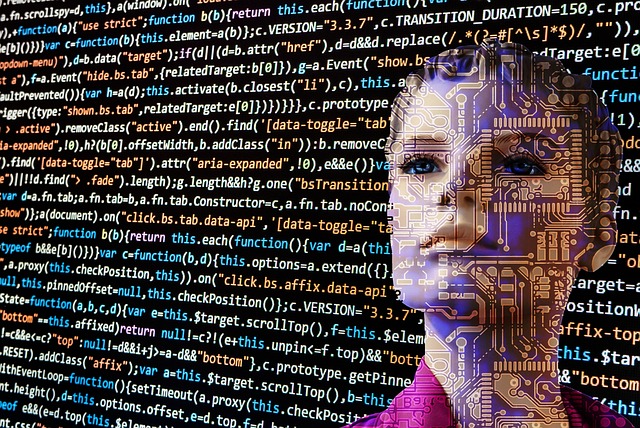
Transforming how developers write, test, and deploy applications.
A. Code Generation and Completion
Making developers exponentially more productive.
-
Autocompletion on Steroids: AI tools can suggest not just the next word, but entire functions, classes, or blocks of code based on the developer’s intent and surrounding context, significantly accelerating the coding process.
-
Natural Language to Code: Developers can describe the desired function in plain English (e.g., “Write a Python function to connect to a database and retrieve all users”), and the AI generates the working code snippet, democratizing software development.
-
Legacy Modernization: Generative AI can be used to analyze old, complex legacy codebases and automatically suggest or perform refactoring, modernizing the code to newer languages or frameworks much faster than human teams could.
B. Testing, Debugging, and Documentation
Automating the necessary but time-consuming tasks.
-
Test Case Generation: AI can automatically generate comprehensive unit and integration test cases based on the functionality of newly written code, ensuring higher coverage and fewer production bugs.
-
Intelligent Debugging: When an error occurs, the Generative AI can analyze the error log and the surrounding code to offer highly accurate explanations of the root cause and suggest specific, working fixes, drastically cutting down debugging time.
-
Automated Documentation: The AI can scan a finished code repository and automatically generate accurate, up-to-date documentation, relieving developers of this frequently neglected but critical maintenance task.
C. Security and Vulnerability Analysis
Protecting code and systems autonomously.
-
Vulnerability Scanning: Generative models can analyze code for known security patterns and weaknesses (e.g., SQL injection risks, buffer overflows) with a depth and speed that traditional static analysis tools cannot match.
-
Patch Generation: When a vulnerability is identified, the AI can be tasked with generating and testing a potential security patch automatically, accelerating the response time to zero-day threats.
-
Synthetic Threat Creation: Security teams can use Generative AI to create highly realistic synthetic network traffic and attack scenarios to rigorously test the resilience of their defense systems in a controlled environment.
Pillar 4: The Ethical, Legal, and Economic Earthquake
Addressing the profound implications of widespread generative capability.
A. Copyright and Intellectual Property (IP)
The challenge of defining originality in AI output.
-
Training Data Rights: A massive legal debate centers on whether the AI models’ output infringes the copyrightsof the artists, writers, or developers whose data was used in the model’s vast training set.
-
Authorship: Establishing who owns the copyright—the user who wrote the prompt, the company that built the AI model, or neither—is a critical unresolved legal issue facing courts worldwide.
-
Deepfakes and Disinformation: Generative AI’s ability to create highly realistic synthetic video and audio (deepfakes) poses an existential threat to information integrity, necessitating new standards for provenance and authentication.
B. Workforce Displacement and Skill Shift
The economic and social restructuring.
-
Disruption of Routine Roles: Highly automatable creative and coding roles (e.g., entry-level graphic design, boilerplate software coding, routine copywriting) are likely to be heavily augmented or displaced by AI tools, driving economic pressure.
-
Rise of the AI Curator: New, high-value jobs are emerging, focused on supervising, managing, and curating the output of Generative AI, shifting the human role from creation to quality control and strategic direction.
-
Need for Regulation: Governments face the challenge of regulating the economic impact of Generative AI while fostering its technological potential, including defining ethical guidelines for deployment and managing potential mass displacement.
C. Model Bias and Transparency
Ensuring fairness and preventing amplification of societal flaws.
-
Bias Inheritance: Because Generative AI learns from the historical data produced by humans, it often inherits and amplifies existing societal biases (e.g., gender, race) in its output, leading to discriminatory results in image generation or content filtering.
-
The Black Box Problem: Explaining why a complex, multi-billion-parameter model produced a specific creative output (the “black box”) is technically difficult, making transparency and accountability challenging when the AI output is flawed or harmful.
-
Safety Guardrails: Significant engineering effort is required to implement safety guardrails and filtering mechanisms to prevent the AI from generating illegal, hateful, or harmful content, a constantly evolving technical and ethical battle.
Pillar 5: The Future of Generative AI Integration
Looking ahead to fully integrated, multimodal, and personalized AI systems.
A. Multimodal AI Integration
Seamless creation across different data types.
-
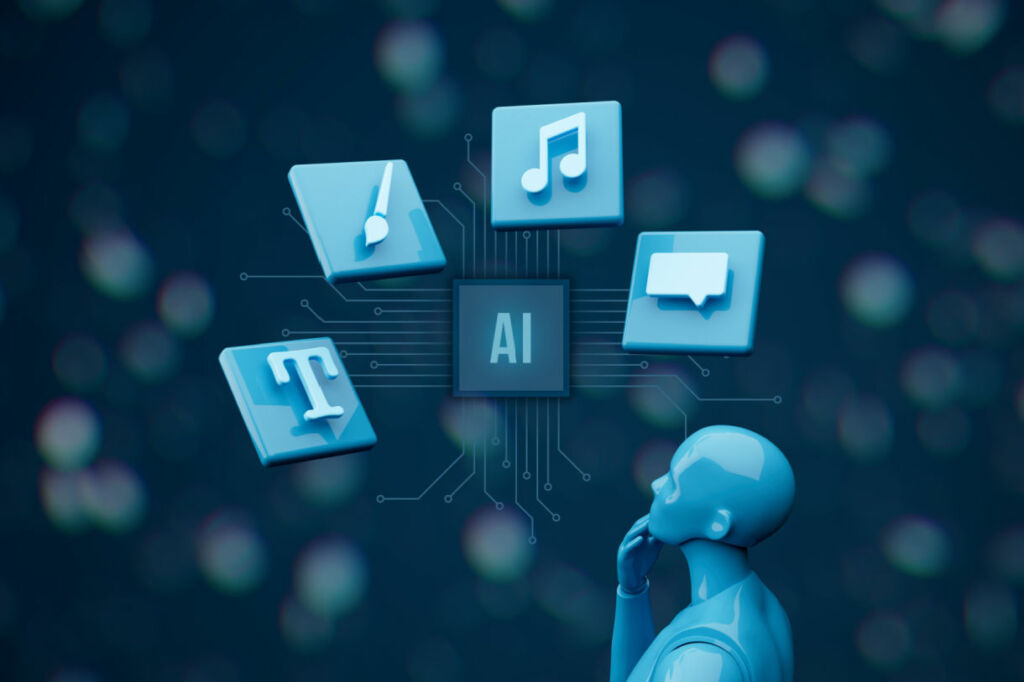
Unified Models: Future Generative AI will be truly multimodal, capable of accepting a text prompt and simultaneously generating not just a still image, but also a fully animated video, a corresponding musical score, and the underlying code for a web page—all from a single prompt.
-
Physical World Generation: Integration with robotics will allow Generative AI to design and physically prototype real-world objects and industrial parts, automatically translating a design concept into the necessary 3D printing or manufacturing instructions.
-
Contextual Awareness: Advanced models will maintain long-term memory and contextual awareness across sessions, allowing the AI to act as a consistent creative partner that remembers past work and stylistic preferences.
B. Personalization and Edge Deployment
Bringing AI creativity into individual hands.
-
Personalized Models: Users will be able to train small, highly specialized Generative AI models using their own personal style, handwriting, or voice, creating truly unique and personalized digital twins for content creation.
-
Local Processing: Advances in chip design and efficiency (like Neuromorphic chips) will allow complex Generative AI models to run locally on consumer devices (smartphones, laptops) rather than relying exclusively on massive cloud servers, improving latency and privacy.
-
Dynamic Storytelling: Generative AI will enable dynamic, interactive storytelling in video games and media, where plot points, dialogue, and character interactions are generated in real-time based on player choices, creating endless, unique experiences.
C. The Rise of Synthetic Data
Fueling the next wave of AI development.
-
Training the Next Generation: Generative AI is increasingly used to create vast, high-quality synthetic datasetsthat are free of privacy concerns and intellectual property restrictions, which are then used to train the next, even more powerful generation of AI models.
-
Simulation Environments: Synthetic data enables the creation of hyper-realistic simulation environments for testing autonomous systems (cars, drones, robots) where real-world training would be too dangerous or expensive.
-
Privacy Protection: By substituting real customer data with statistically identical synthetic data, companies can analyze patterns and train models while maintaining strict customer privacy and compliance standards.
Conclusion: The Unstoppable Wave of Creation
Generative AI marks a monumental paradigm shift in technology, transforming artificial intelligence from a passive analytical tool into an active, unprecedented creative force capable of autonomously inventing novel content and complex solutions.
This profound technical capability is built upon revolutionary architectures like GANs and Diffusion models, which have been specifically engineered to navigate the vast latent space of data and synthesize high-fidelity outputs in the form of code, text, image, and sound.
The immediate impact is felt acutely in the creative and software industries, where AI now acts as a force multiplier, dramatically accelerating processes such as rapid concept prototyping, the mass production of personalized marketing assets, and the efficient generation of production-ready code.
However, this technological liberation brings with it critical, unresolved challenges, primarily centered on establishing clear legal frameworks for copyright ownership, mitigating inherent model biases, and developing new standards for detecting and addressing malicious content like deepfakes.
The economic and social restructuring caused by Generative AI demands a proactive shift in the global workforce, moving human talent away from routine execution and toward high-value roles focused on strategic direction, critical curation, and sophisticated prompt engineering.
Looking ahead, the convergence of multimodal AI, localized edge deployment, and the creation of synthetic data will further integrate these tools into every aspect of business and personal life, creating seamlessly automated and hyper-personalized digital experiences.
Ultimately, by embracing Generative AI, humanity is gaining an infinitely scalable creative partner that will unlock reservoirs of productivity and innovation, redefining what is technically possible and irreversibly shaping the future of work and artistry.