Since the inception of the digital age, nearly all computational tasks, from running spreadsheets to training complex artificial intelligence models, have relied upon the classic von Neumann architecture, which fundamentally separates the processing unit (CPU) and the memory unit, requiring data to be constantly shuttled back and forth across a bottlenecked bus, a process that is intensely energy-consuming and inherently slow for handling the immense, concurrent streams of sensory data demanded by modern applications like robotics and real-time vision processing.
This “von Neumann bottleneck” is becoming a critical limiting factor, particularly as the complexity of deep neural networks skyrockets, leading to massive data centers that consume truly astronomical amounts of electrical power and generate vast heat, making the continued exponential scaling of conventional AI both environmentally and economically unsustainable for widespread edge deployment.
Nature, however, provides a solution: the human brain, which operates on the incredibly energy-efficient power of approximately 20 watts while effortlessly processing and learning from continuous sensory input in real-time, achieves this efficiency by seamlessly integrating processing and memory into highly interconnected units called neurons and synapses.
Inspired by this biological masterpiece, a revolutionary class of hardware known as Neuromorphic Chips seeks to fundamentally break the traditional computing mold by mimicking the brain’s structure and function, promising to deliver a quantum leap in energy efficiency, speed, and real-time adaptive intelligence, paving the way for truly autonomous and sustainable AI.
Pillar 1: Deconstructing the Neuromorphic Difference
Defining the fundamental architectural departure from traditional computer chips.
A. The Von Neumann Bottleneck (The Problem)
The inherent inefficiency of conventional processors.
-
Separate Components: Traditional chips strictly separate the Central Processing Unit (CPU) and the Random Access Memory (RAM) into distinct physical locations.
-
Data Shuttling: Every time data is processed, it must be moved back and forth between the CPU and RAM across a narrow connection, consuming time and vast amounts of energy.
-
High Energy Cost: This constant movement is known as the “von Neumann bottleneck,” and it accounts for over 90% of the energy consumed by AI training and inference on conventional hardware.
B. The Brain-Inspired Architecture (The Solution)
Integrating processing and memory at the nanoscale.
-
In-Memory Computing: Neuromorphic chips embed the processing elements directly alongside or within the memory itself, fundamentally eliminating the need to constantly move data.
-
Spiking Neural Networks (SNNs): Unlike the continuous, fixed-rate calculations of deep learning (ANNs), neuromorphic chips use SNNs, which mimic the brain by communicating information using sparse, asynchronous “spikes” (pulses of electrical activity).
-
Massive Parallelism: The chips are designed with tens of thousands of interconnected, parallel processing cores(the artificial neurons), allowing them to handle concurrent data streams far more efficiently than the sequential nature of a standard CPU.
C. Analogue vs. Digital Spiking
Implementing SNNs in different hardware forms.
-
Digital Neuromorphic: Chips like IBM’s TrueNorth or Intel’s Loihi use standard digital semiconductor technology but implement the spiking, event-driven architecture and synaptic rules in software, providing programmability.
-
Analog/Mixed-Signal: Other approaches use analog circuitry to model the continuous physics of the neuron and synapse more closely, which can offer even greater energy efficiency and density but often sacrifices some programmability.
-
Memristors and Synaptic Devices: Future neuromorphic designs aim to use novel non-volatile memory devices (like memristors) that can physically store the synaptic weight (the connection strength) and perform computation, integrating memory and processing perfectly.
Pillar 2: The Energy and Speed Metrics
Quantifying the massive operational gains over conventional hardware.
A. The Breakthrough in Energy Efficiency
Achieving autonomous function with minimal power draw.
-
Event-Driven Computing: Because the artificial neurons only “fire” (or spike) when there is meaningful change or input (an event), the chip only expends energy when necessary, unlike standard chips that constantly draw power.
-
Orders of Magnitude Improvement: This event-driven, in-memory approach allows neuromorphic chips to perform complex AI inference tasks at thousands of times less power than a standard Graphics Processing Unit (GPU) or CPU.
-
Real-World Example: Neuromorphic processors can perform highly complex pattern recognition from sensor data using power measured in milliwatts (thousandths of a watt), enabling battery-powered AI applications that are impossible today.
B. Speed and Latency Reduction
Enabling immediate, real-time adaptive response.
-
Instantaneous Local Memory: By eliminating the memory access bottleneck, neuromorphic chips can access and process data instantaneously, resulting in significantly lower latency compared to conventional systems.
-
Real-Time Sensor Fusion: This low latency is crucial for applications that require real-time sensor fusion(combining data from cameras, audio, touch sensors) for immediate response, such as autonomous robot navigation or prosthetics control.
-
Asynchronous Operation: The asynchronous nature of the spiking activity means that the system is inherently faster at handling high-frequency, complex, parallel data streams than sequential processors operating on a fixed clock cycle.
C. Scalability and Density
Packing massive computing power into a tiny space.
-
Synaptic Density: Neuromorphic designs can achieve an exceptionally high density of artificial synapses(connections) on a single chip, mimicking the incredible interconnection density of the biological brain.
-
Wafer-Scale Integration: Researchers are exploring wafer-scale integration, where an entire silicon wafer is used as a single, massive neuromorphic processor, enabling unprecedented scale for next-generation supercomputers and deep learning systems.
-
Compact Deployment: The small physical size and low power requirement of these chips make them ideal for deployment at the “edge”—directly inside drones, sensors, mobile devices, and industrial robots—where space and power are severely constrained.
Pillar 3: Applications Redefined by Neuromorphic AI
The high-impact areas where this technology provides unique value.
A. Robotics and Autonomous Systems
Giving machines human-like sensory response.
-
Real-Time Vision: Neuromorphic chips can process data from dynamic vision sensors (DVS), which only report changes in light, allowing robots to perceive movement and change with incredibly high speed and efficiency.
-
Bionic Senses: The technology enables the development of highly sensitive, low-power prosthetic limbs that can process sensory input (touch, pressure) and respond in real-time, offering a much more natural control interface.
-
Acoustic Sensing: SNNs can be trained for extremely accurate, continuous, and ultra-low-power acoustic event detection (e.g., detecting specific equipment failures in a factory or unauthorized sounds in a perimeter).
B. Edge Computing and Internet of Things (IoT)
Distributing intelligence widely and efficiently.
-
Always-On Sensing: Neuromorphic chips enable always-on sensing for battery-powered IoT devices without rapidly draining power, allowing security cameras or remote monitors to stay perpetually vigilant for a specific “spike” pattern.
-
Local Decision Making: Instead of sending all raw sensor data to the cloud for processing, these chips allow complex decision-making to occur locally (at the edge), reducing reliance on internet connectivity and vastly improving data privacy.
-
Smart Security: They can power intelligent home security systems that can distinguish between the movement of a pet, a car, and an unauthorized human, activating alerts only when necessary with high confidence.
C. Computational Neuroscience and Medicine
Simulating the brain for research and therapy.
-
Brain Modeling: Neuromorphic hardware provides a powerful, biologically accurate platform for computational neuroscientists to build and simulate large-scale models of the human brain’s neural networks, accelerating research into cognitive function.
-
Drug Discovery: Simulating the effects of pharmaceutical compounds on complex neural circuits can be performed much faster and more accurately on neuromorphic hardware, potentially accelerating the drug discovery process for neurological disorders.
-
Next-Gen AI Research: The SNN architecture inspires fundamentally new machine learning algorithms that are inherently more energy-efficient and better at continuous, unsupervised learning than current deep learning methods.
Pillar 4: The Programming and Software Ecosystem Challenge
Overcoming the learning curve for a fundamentally new architecture.
A. The Challenge of Spiking Neural Networks (SNNs)
A new paradigm for algorithm design.
-
Different Learning Rules: SNNs use temporal coding and event-driven plasticity rules (like Spike-Timing Dependent Plasticity, or STDP) that are fundamentally different from the backpropagation algorithms used for standard deep learning (ANNs).
-
Tooling Immaturity: The software tools and development frameworks for SNNs are far less mature and standardized than those for traditional deep learning (TensorFlow, PyTorch), creating a steep learning curve for developers.
-
Data Representation: Data must be converted from conventional formats (images, audio) into the precise temporal spike sequences that the SNNs can understand, a process called encoding that adds initial complexity.
B. Bridging the Gap to Deep Learning (ANNs)
Making existing AI models compatible.
-
ANN to SNN Conversion: Researchers have developed methods to convert existing, highly successful Deep Neural Networks (ANNs) into equivalent SNN architectures that can run efficiently on neuromorphic hardware, though this process can introduce accuracy loss.
-
Hybrid Training: Developing hybrid training methods that use the best of both worlds—training an SNN with the global optimization power of backpropagation while utilizing the temporal, event-driven advantages of the SNN architecture.
-
Standardization Efforts: Organizations are working to standardize the hardware interfaces and software APIsfor neuromorphic computing, making it easier for AI developers to transition their workflows from GPUs to SNN accelerators.
C. The Need for New Skills
Developing the next generation of computational neuro-engineers.
-
Interdisciplinary Expertise: Deploying neuromorphic systems requires interdisciplinary experts who understand not only computer engineering but also neuroscience, data coding, and advanced signal processing.
-
New Educational Pathways: Universities must develop specialized curricula that teach the principles of SNNs, temporal coding, and the unique challenges of designing algorithms for event-driven hardware.
-
Open Access Platforms: Making neuromorphic hardware resources available through cloud platforms (like Intel’s Loihi research cloud) allows a wider community of researchers and developers to experiment and innovate with the technology.
Pillar 5: Commercialization and Future Horizons
The path from laboratory experiments to mass-market availability.
A. Strategic Partnerships and Niche Markets
Targeting areas where efficiency is non-negotiable.
-
Automotive and Aerospace: The immediate commercial focus is on high-value niche markets like aerospace and autonomous vehicles, where the combination of low power, real-time response, and high resilience is worth the high initial investment cost.
-
Hearing Aids and Medical Devices: The tiny size and extreme power efficiency make neuromorphic chips perfectly suited for medical implants and advanced hearing devices that require sophisticated, continuous audio processing within a minimal power envelope.
-
Accelerating AI Inference: As costs drop, the technology will eventually be used to accelerate AI inference in massive data centers, providing power savings for major cloud providers running continuous translation and classification tasks.
B. The Integration with Quantum Computing
Combining two revolutionary technologies.
-
Quantum-Accelerated Training: Exploring the possibility of using Quantum Computing to accelerate the incredibly complex training phase of large-scale SNNs, which could dramatically reduce the training time.
-
Neuromorphic-Quantum Interface: Research into integrating neuromorphic architectures with quantum sensors to process complex quantum data streams in real-time, opening up new scientific measurement capabilities.
-
Brain-Machine Interfaces (BMI): The low power and high parallelism of neuromorphic chips make them the ideal candidate for processing signals from the human brain in BMIs, creating the next generation of assistive and communication technologies.
C. Bio-Inspired Materials and Hardware
Moving beyond silicon to mimic biology even closer.
-
Liquid-State Computing: Research into non-silicon-based substrates, such as liquid-state or chemical systems that dynamically reorganize themselves, to mimic the fluid, adaptive nature of biological computation.
-
Opto-Neuromorphic Chips: Using light (photonics) instead of electrical signals to transmit information between artificial neurons, potentially offering communication speeds faster than purely electronic chips while maintaining low power consumption.
-
Self-Repairing Systems: Developing systems that can autonomously detect and re-route around physical defectsor failures within the chip structure, mimicking the brain’s incredible resilience and plasticity.
Conclusion: The Sustainable Future of AI
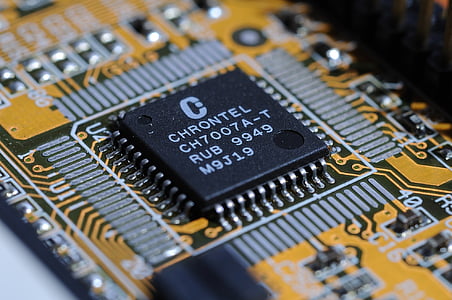
Neuromorphic chips represent a fundamental, necessary break from the energy-intensive von Neumann architecture, promising a sustainable and highly efficient pathway for the exponential growth of artificial intelligence.
This revolutionary hardware achieves its efficiency by perfectly mimicking the biological brain’s structure, integrating processing and memory and communicating information through sparse, asynchronous “spikes” rather than constant, power-hungry data transfers.
The result is a transformative leap in operational metrics, enabling complex AI tasks to be performed using power measured in mere milliwatts and dramatically lowering the latency required for crucial, real-time decision-making in autonomous systems.
The immediate, high-value applications for this technology lie in areas where efficiency and speed are paramount, including autonomous robotics, highly responsive prosthetic devices, and always-on sensing for battery-constrained devices at the very edge of the network.
However, the technology’s maturity is currently constrained by the nascent software ecosystem, demanding that developers master the unique principles of Spiking Neural Networks (SNNs) and requiring significant efforts to standardize tools and create effective migration pathways from existing deep learning models.
The future roadmap suggests a strategic deployment, first targeting high-value niche markets like medical implants and aerospace, followed by eventual integration into cloud data centers to mitigate the current energy crisis associated with massive-scale AI training.
Ultimately, by embracing the brain’s elegantly efficient design, neuromorphic chips are poised to unlock truly ubiquitous, autonomous, and ecologically sustainable AI, transforming the digital world from a power-hungry collection of servers into a vast, intelligently responsive network.